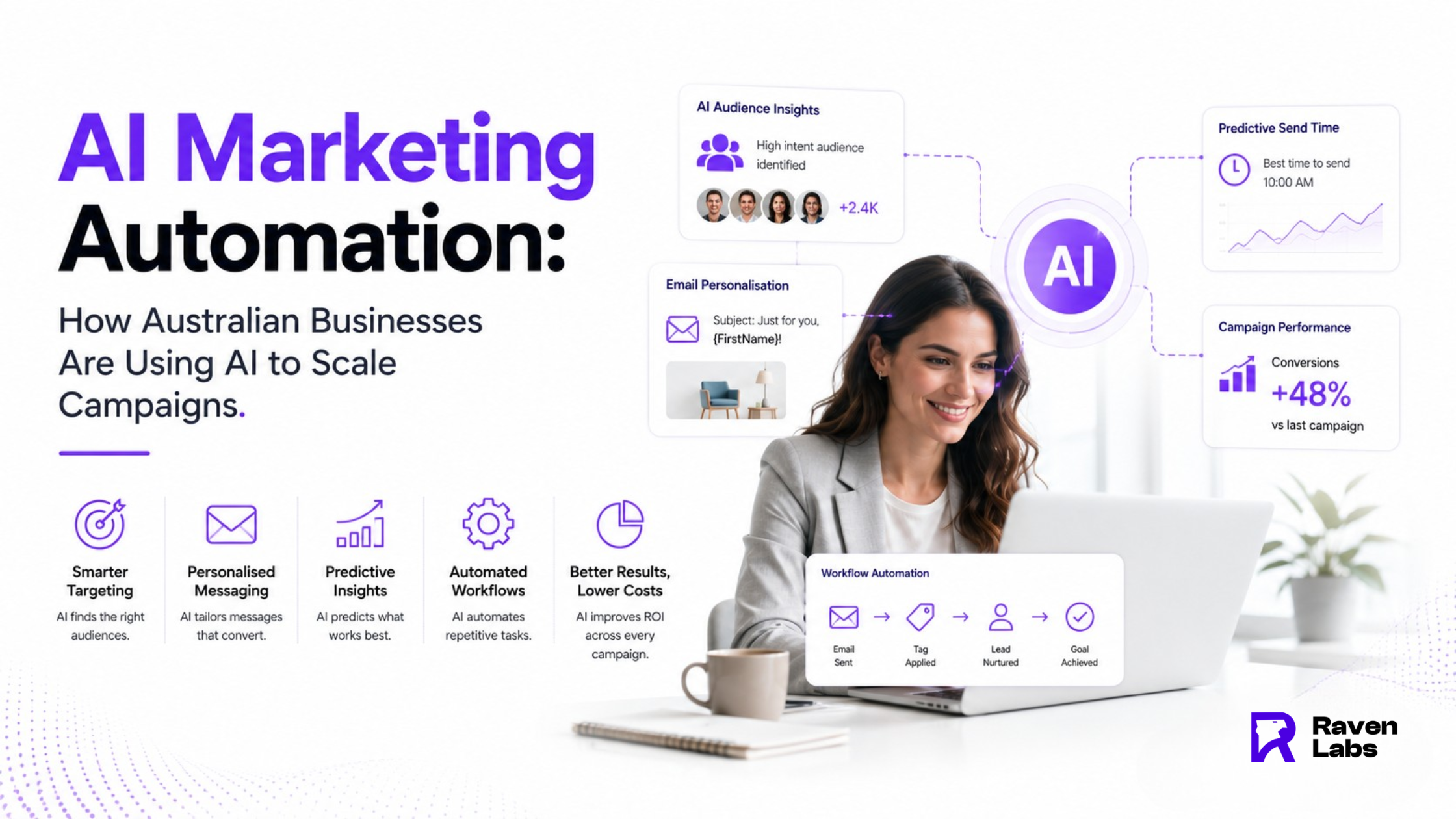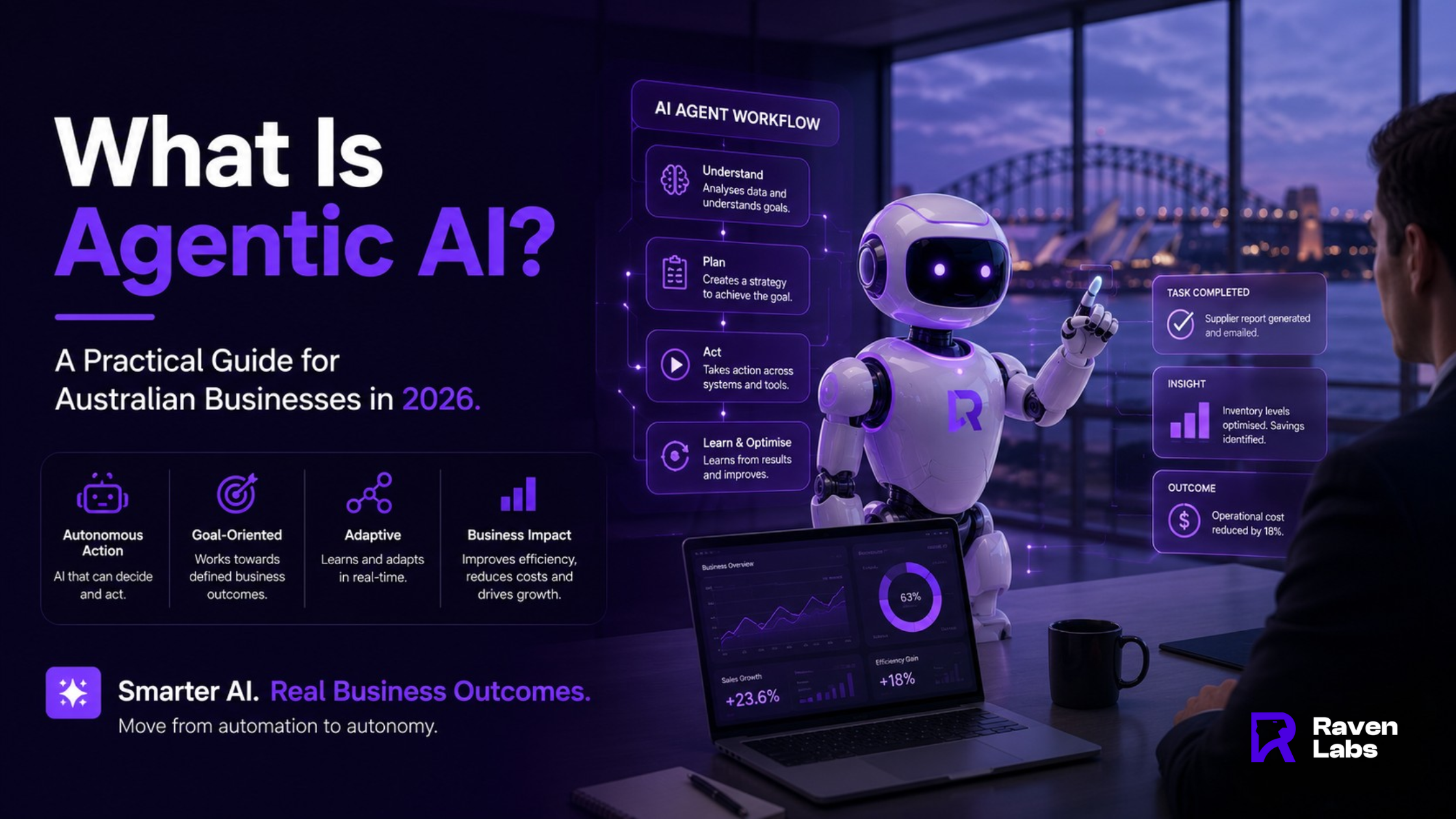
One marketing coordinator, running the campaign output that used to take three people. That is not because AI replaced anyone it is because it removed the parts of the job nobody wanted: manual list segmentation, guessing at send times, and writing eight subject-line variants by hand. That is the practical shape of AI marketing automation in Australia right now.
What AI Marketing Automation Actually Automates
Four areas see the most genuine value: segmentation (grouping contacts by behaviour and likely intent rather than manual list-building), content variants (generating and testing multiple versions of subject lines, copy or creative), send-time optimisation (learning when each individual contact is most likely to engage, rather than sending everything at 9am), and personalisation at scale (tailoring content to an individual’s history without a human writing each version by hand).
Where AI Adds Real Value vs Where It Is Overhyped
AI marketing automation is genuinely good at repetitive, high-volume, pattern-based work the kind of task a human could technically do but that does not benefit from human judgement per repetition.
It is genuinely overhyped as a replacement for strategy and creative direction, which still need a person setting the direction, defining the brand voice, and deciding what the campaign is actually meant to achieve.
The businesses getting the most value are using AI to execute a human-defined strategy at scale, not asking AI to invent the strategy itself.
How It Connects Back to Your CRM
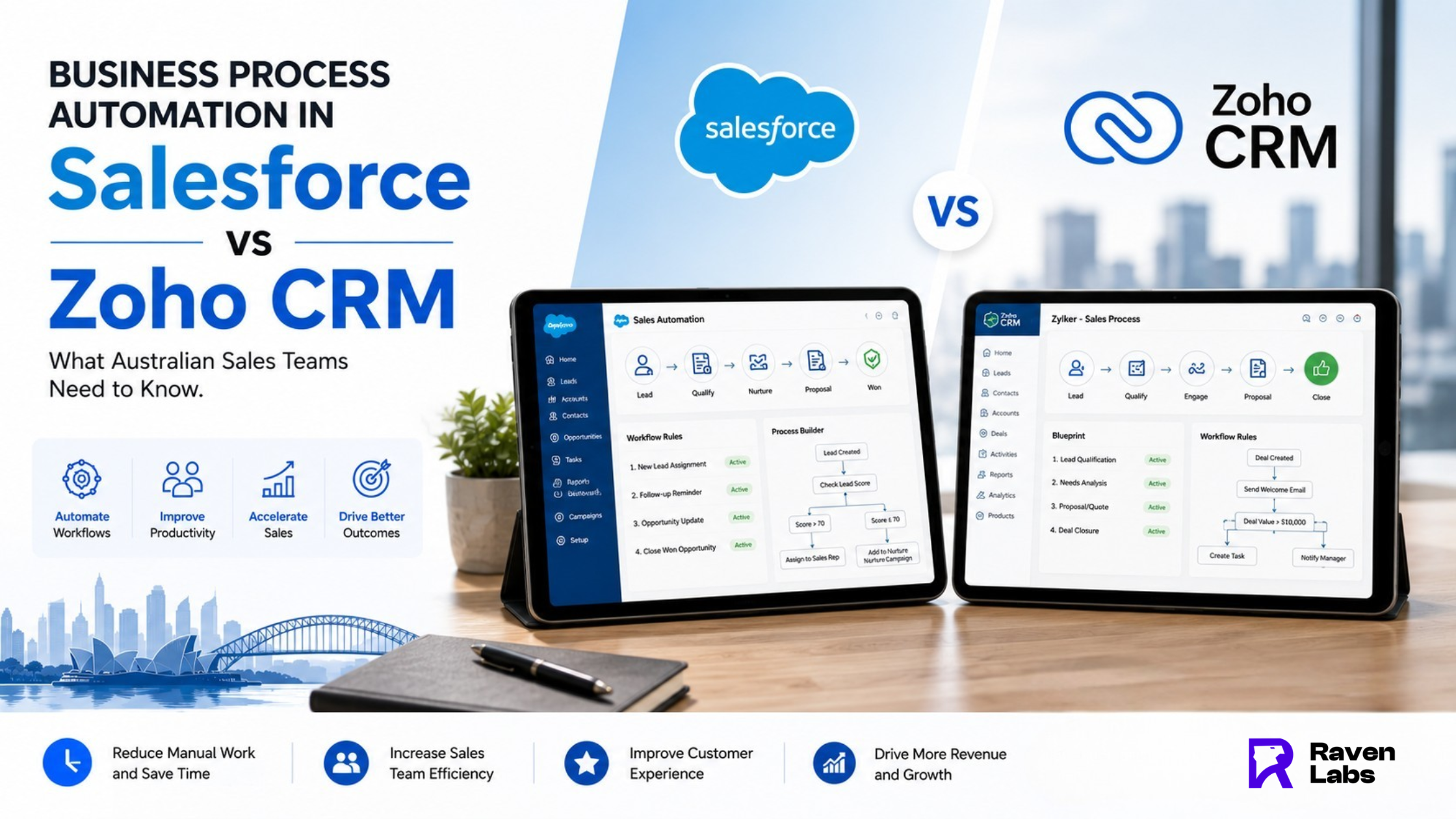
The real ROI in AI marketing automation shows up when it is connected to your CRM Zoho or Salesforce rather than run as a standalone email tool.
A lead’s CRM history (what they have bought, what they have clicked, where they sit in the sales pipeline) is what makes AI-driven segmentation and personalisation genuinely useful, rather than just automated guesswork layered on top of a disconnected contact list.
A Simple Framework for Your First AI-Automated Campaign
Rather than automating everything at once, start with a single campaign type a lead nurture sequence is usually the highest-value first project, because cold leads sitting untouched in a CRM represent a clear, measurable cost.
Define the segment, map the sequence of touchpoints (not just emails consider SMS, retargeting and sales hand-off points too), add AI for content variants and send-time optimisation, then set a clear exit condition and hand-off point to sales.
How to Measure ROI Honestly
The metrics that matter are not vanity metrics like open rate in isolation they are pipeline-connected: how many leads moved from the nurture sequence into a sales conversation, how many of those converted, and what the cost per qualified lead looks like compared to your previous manual process. If you cannot trace a campaign back to pipeline impact, you are measuring activity, not results.
Where to Start If You Are Not Automating Yet
If your business is not running basic marketing automation at all yet, AI is not the right first move get foundational, rule-based automation working first (welcome sequences, basic triggers), then layer AI-driven segmentation and optimisation on top once the fundamentals are proven.
Jumping straight to AI without that foundation tends to produce impressive-sounding pilots that never scale into reliable, repeatable results.
Want to See Where AI Could Scale Your Marketing?
Find out exactly which of your current campaigns are ready for AI, and which need foundational automation first. Book a free marketing automation audit at ravenlabs.com.au or call 1300 305 009.
FAQ’S
1. What is the difference between AI marketing automation and traditional email automation?
Traditional automation follows fixed triggers and sends one version of a message to everyone. AI marketing automation predicts who should receive what content, when, and continuously adjusts based on results, rather than following a static rule set.
2. Do I need AI marketing automation if I am a small business?
Not necessarily as a first step. If you are not yet running basic automation (welcome sequences, simple triggers), building that foundation first typically delivers faster returns than jumping straight to AI-driven tools.
3. How does AI marketing automation connect to Zoho or Salesforce?
Most AI marketing platforms integrate with CRM systems via native connectors or APIs, allowing campaigns to use real CRM data (purchase history, pipeline stage) for segmentation and personalisation rather than working from a static contact list.
4. What is the best first AI marketing automation project for an Australian SME?
A lead nurture sequence for cold or unengaged CRM contacts is typically the highest-value starting point, since those leads represent an existing, measurable cost with a clear path to ROI.
5. How do I measure the ROI of AI marketing automation?
Track pipeline-connected metrics leads that progressed to a sales conversation, conversion rate, and cost per qualified lead rather than surface-level metrics like open rate alone.