
Why Microsoft 365 Copilot Adoption Is Stalling
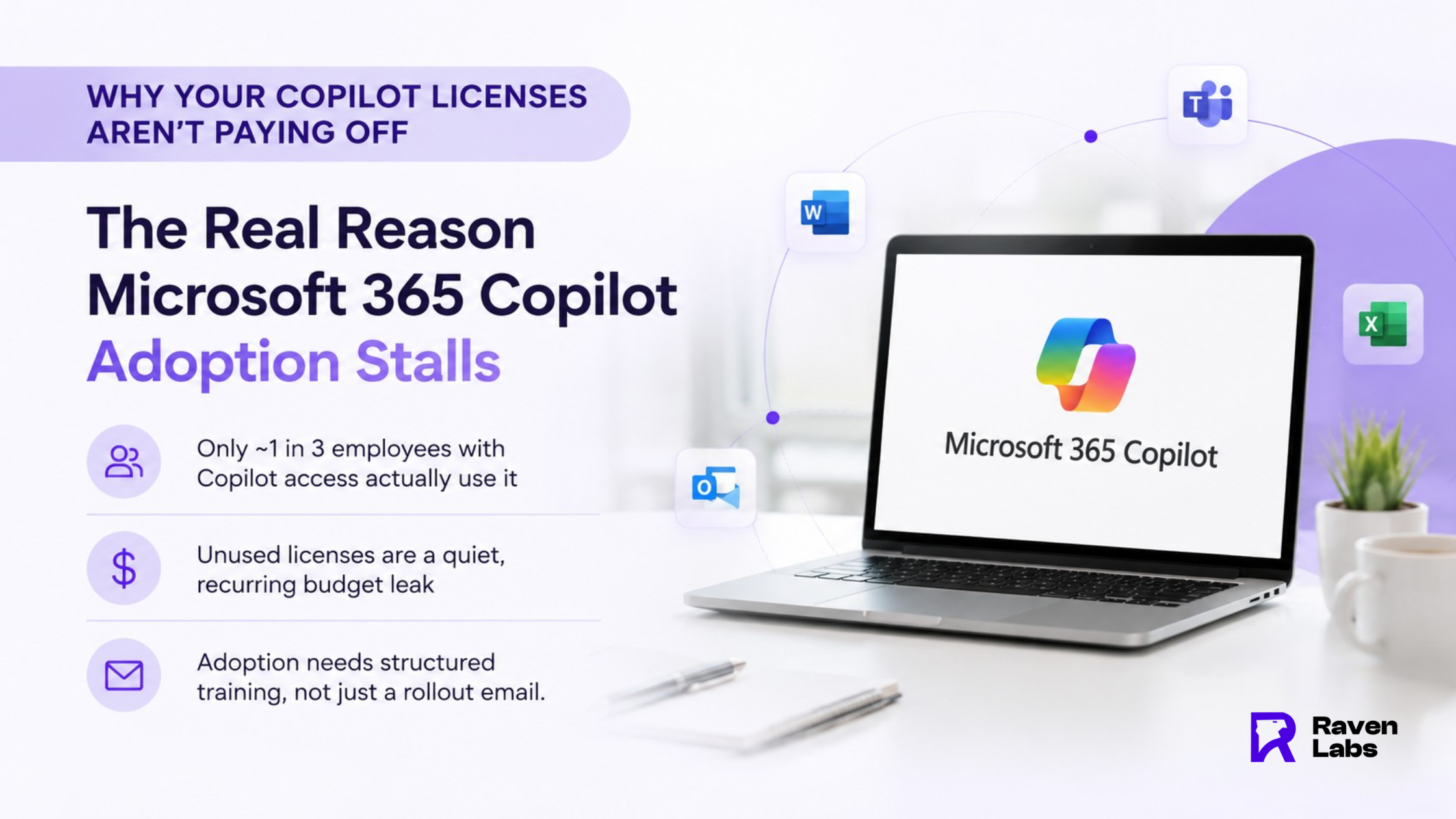
Most Australian businesses that bought Microsoft 365 Copilot licences are not seeing the return they expected. Independent tracking puts the workplace conversion rate at roughly 36% meaning fewer than four in ten employees with access actually use Copilot in a given month. That gap is not a Copilot problem. It is a training problem, and it is quietly costing Australian businesses money every single billing cycle.
The Licence Usage Gap Nobody Budgets For
Microsoft 365 Copilot is sold on a per seat basis, which means every unused licence is a fixed cost with zero return. Enterprise data shows Copilot for Microsoft 365 has crossed 20 million paid seats globally, yet active usage still lags well behind provisioning at most organisations. Some large scale rollouts Wipro, Infosys, and TCS among them report monthly active usage above 85%, but they got there through structured, phased training programs, not by handing out access and hoping. For the average Australian business, the starting point looks very different: licences switched on, a single announcement email sent, and adoption left to chance.
Why Adoption Stalls: Trust, Training, and No Clear Use Cases
Three factors consistently explain stalled Copilot adoption. First, trust: independent tracking has recorded negative accuracy sentiment for Copilot at points across 2025 and into 2026, and close to 44% of employees who stop using it cite distrust of its answers as the primary reason. Second, training: employees are rarely shown where Copilot fits into their actual daily tasks, so it gets treated as a novelty rather than a tool. Third, absent use cases: without a short list of tasks Copilot is proven to help with drafting, summarising, data analysis staff default back to habits they already trust, including free public AI tools that were never approved for company data.
The Real Cost of Unused Copilot Licences
At roughly AU$45 per user per month, a business with 200 licensed staff and a 36% usage rate is paying for 128 seats nobody is using north of AU$69,000 a year in dead spend, before counting the productivity gains never realised. Word drafting and Excel analysis are the two use cases enterprises most often cite for measurable time savings once Copilot is properly adopted, which makes the gap between paying for the tool and using it especially expensive to leave unaddressed.
Closing the Gap: Structured Training, Not Another Rollout Email
Every large-scale Copilot success story shares the same pattern: phased governance, focused use cases, and hands-on training tied to specific roles not a one-off webinar. Businesses that treat Copilot adoption as a change-management project, not an IT switch-on, are the ones moving usage from the 30s into the 70s and 80s. That starts with a clear-eyed audit of who has a licence, who is actually using it, and what is stopping the rest.
Conclusion
Stalled Copilot adoption isn’t a software failure it’s a training and governance gap that compounds every billing cycle it’s left unaddressed. Closing it starts with an honest audit of who has a licence, who’s actually using it, and why the rest aren’t.
Ready to Turn Your Copilot Licences Into Actual Usage?
Raven Labs helps Australian businesses close the gap between Copilot licences purchased and Copilot actually used, through governance, focused use cases, and role specific training.
Book a free Copilot Adoption Audit at theravenlabs.com
In 45 minutes we’ll review your current licence usage, benchmark it against enterprise adoption data, and map the fastest path to real ROI.
Contact us Today :
Email – [email protected]
Phone – 1300 305 009
Website – www.theravenlabs.com
FAQ’S
1: What percentage of Microsoft 365 Copilot licences actually get used?
Independent analyst data puts workplace conversion at around 36% as of early 2026 meaning fewer than four in ten licensed employees use Copilot in an average month. Large enterprises that run structured training programs report usage well above 85%.
2: Why do employees stop using Copilot after the first few weeks?
The most commonly cited reason is distrust of Copilot’s answers, alongside a lack of clear guidance on which
day to day tasks it’s actually good at. Without training tied to real workflows, most staff try it once and go back
to their old habits.
3: Is Copilot adoption a technology problem or a training problem?
The technology is largely proven the enterprises reporting 85%+ active usage are using the same product as
everyone else. The difference is structured, role specific training and clear use cases, not the underlying tool.
4: How much are unused Copilot licences costing my business?
At roughly AU$45 per user per month, a 200 seat business running at 36% usage is paying for well over 100
unused seats typically tens of thousands of dollars a year in licence cost with no productivity return.
5: What’s the fastest way to fix stalled Copilot adoption?
Start with an audit of actual usage against licensed seats, identify the specific tasks each team should use
Copilot for, and run short, hands on training sessions rather than a single rollout announcement.