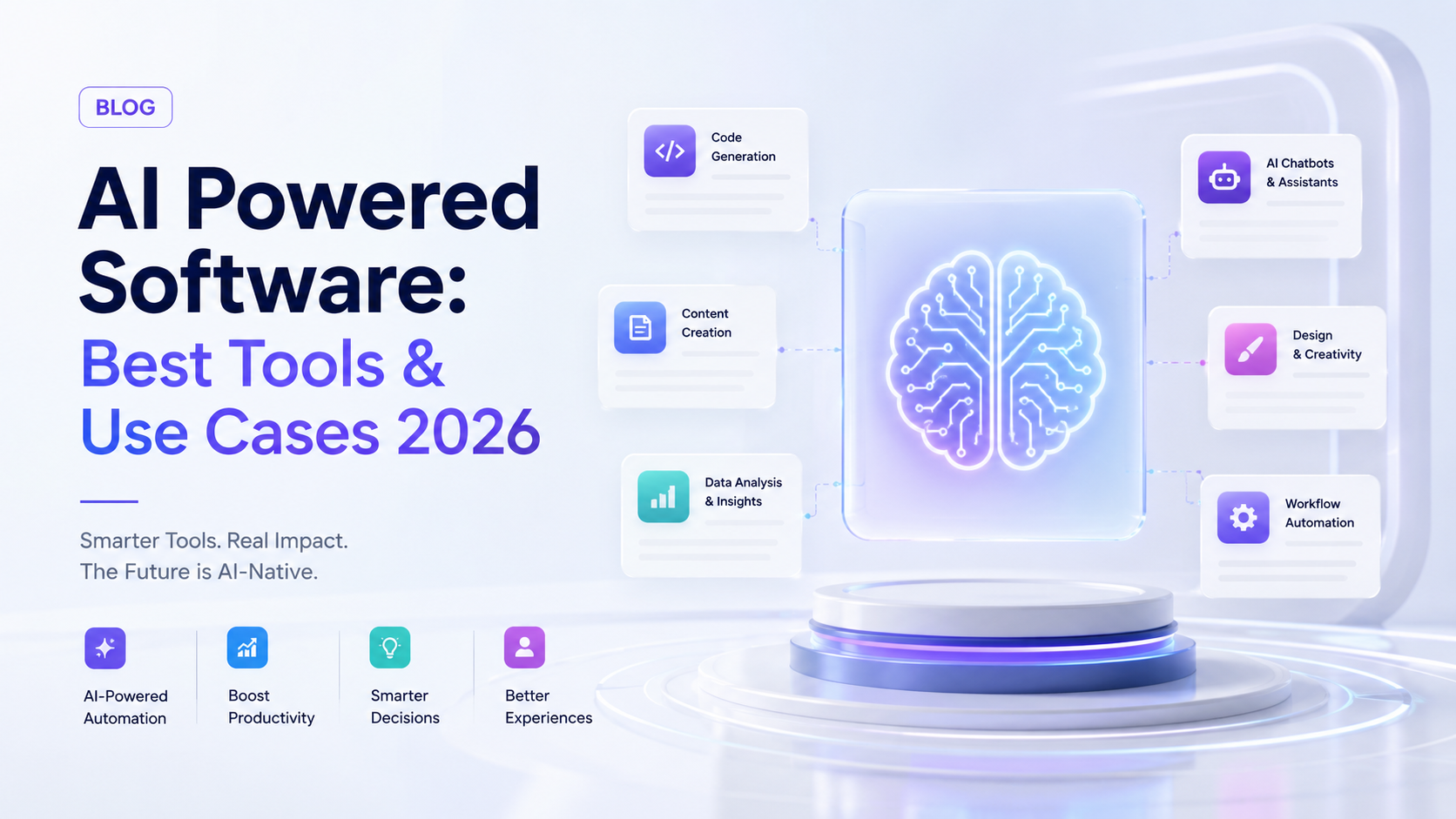
Recent data shows that 92% of companies plan to boost their AI investments in the next three years. Yet seven out of ten organizations have barely seen any returns from their AI initiatives. This stark contrast between investment and results shows why businesses need proper AI readiness assessment before rushing into implementation.
This piece offers a practical roadmap for AI applications in business. At Raven Labs we look at why 2026 marks a crucial moment for adoption. Our AI readiness assessment methodology helps your organization traverse this complex terrain more effectively. The roadmap ensures your business stays prepared for future challenges, whether you’re beginning your AI experience or expanding existing projects.
The new era of AI in the workplace
The business world stands at the edge of its biggest operational change since the industrial revolution. AI has grown from experimental tools into essential business infrastructure. This change is altering how companies work in every industry.
How AI is changing business operations
AI changes core business functions by automating tasks that take up 60-70% of employees’ time. Companies now find that adding AI does more than automate – it reshapes how work flows. About 21% of companies that use generative AI have completely redesigned their processes. AI-powered systems now handle assembly and quality control in manufacturing. Financial services use “agent squads” to manage compliance processes and update old systems. These changes cut processing time by up to 50%.
Why 2026 is a turning point for adoption
The year 2026 marks a crucial point as several key factors meet. AI adoption will split companies into two groups by then: those who scale AI solutions and those disrupted by them. Companies that succeed with AI point to two key factors: they track clear KPIs and follow detailed roadmaps. On top of that, agent frameworks have matured, workers feel more comfortable with AI (75% welcome collaboration), and regulations have become clearer. These signs show that 2026 will be the year AI becomes essential rather than optional.
The rise of agentic and multimodal AI
Agentic AI systems can make decisions and learn on their own, marking the rise from passive tools to active partners. These systems combine multiple data types (text, images, audio, video) to understand information like humans do. Companies that utilize these capabilities see remarkable results – some report 95% better productivity and 57% faster decision-making. McKinsey calls the agentic organization model the “next fundamental change for the AI era”. This model brings humans and AI together to work as partners at almost no extra cost. Eventually, every consumer might have their own AI assistant to manage tasks, negotiate with other agents, and learn from their habits.
Are your people and processes AI-ready?
Your people and processes play the most important role in successful AI implementation. Many organizations rush to deploy AI solutions, but reality shows a different picture – nearly 70% of C-suite leaders say their teams aren’t ready to utilize AI technologies.
Understanding the AI readiness assessment framework
AI readiness assessments measure how prepared an organization is in several key areas:
- Business and AI strategy
- Governance and security
- Data foundations
- Organization and culture
- Infrastructure and model management
These frameworks help companies see their current maturity level and find gaps in leadership vision, investment line-up, and integration capabilities. Companies typically fall into four groups: Laggards (0-30 points), Followers (31-60), Chasers (61-85), or Pacesetters (86+ points).
Employee optimism vs. leadership hesitation
The numbers tell an interesting story – 90% of employees feel positive about their company’s AI plans, but there’s a big gap between what management thinks and what’s happening on the ground. While 75% of C-suite members think AI adoption works well, only 45% of employees agree. Half of CEOs believe their workers resist or openly oppose AI technology, yet 73% of CTOs and CIOs see their workers’ enthusiasm for AI.
Millennials as AI adoption champions
Millennials (ages 28-43) lead the pack in workplace AI adoption. One in three millennials use generative AI tools daily, with 33% using AI daily compared to 28% of Gen Z. They trust AI more and often double-check AI results with traditional sources, which shows their digital expertise.
Training gaps and support needs
The current AI skills gap comes down to training. While 66% of workers want more formal AI training, only 35% have received it. Companies using AI face adoption challenges – 38% stem from insufficient training. Future-proof your business today. Partner with Raven Labs to assess your AI readiness and implement solutions that align with your goals and growth. Companies need to focus on upskilling their people, as 57% of CEOs prefer training existing employees in AI skills rather than hiring new ones.
Balancing speed with safety in AI deployment
Organizations must balance quick deployment with responsible AI implementation. PwC’s research shows companies that move decisively yet thoughtfully have substantial advantages in today’s market.
Why speed matters in AI implementation
Modern cyber defense depends on timing, especially when AI-driven threats evolve at unprecedented rates. Quick AI implementation leads to 30% productivity improvements, which creates competitive advantages lasting decades. Companies that don’t act quickly risk falling behind as the stakes in this race involve billions, if not trillions, of dollars.
Top concerns: cybersecurity, accuracy, and bias
Quick implementation comes with major risks. Data from 65% of organizations shows AI-related data leaks, which raises serious cybersecurity concerns. Half of all CEOs worry about accuracy and bias. Algorithmic bias can create distorted outputs that lead to harmful outcomes.
Building trust through transparency and governance
Research shows that all but one of these executives have yet to implement fundamental responsible AI capabilities. Trust remains crucial—AI value grows only as fast as trust builds. Good governance needs reliable control structures with clear policies, frameworks, and oversight. Organizations that build explainable AI systems tap into tangible value through wider adoption, better performance, and stronger user confidence.
From pilot to scale: Building long-term AI value
Most organizations face their biggest challenge when they try to move from AI experiments to full deployment. The numbers paint a grim picture – 88% of AI prototypes never make it to production. Many companies get stuck running endless pilots that add little value.
Choosing the right AI applications in business
The key is to find specific business problems that AI can solve, rather than adding technology without purpose. Look at your existing tools first since many already have AI features built in. A systematic approach works best: set clear goals, check how easy it is to use, plan your budget, check if it works with your systems, make sure it can grow with you, and test free trials before you buy.
Avoiding the pilot trap
“Pilot purgatory” explains why 95% of corporate AI projects show no returns. Projects often fail because they lack connection to business goals, have no executive backing, or face pushback from staff. Teams that work with external partners reach deployment twice as often compared to internal projects.
Creating measurable ROI from AI use cases
Companies that scale AI well see revenue impacts three times higher—up to 20% of their total revenue. Future-proof your business today. Partner with Raven Labs to assess your AI readiness and implement solutions that align with your goals and growth. Track both early signs of success like productivity gains and actual financial outcomes. An organizational AI scorecard helps monitor these metrics.
Scaling across departments and functions
Successful scaling needs more than just adding AI to existing workflows—it needs a complete process redesign. A central AI platform with controlled access to verified capabilities can speed up approvals by 90%.
Conclusion
Businesses must overcome significant challenges to become AI-ready by 2026. Our roadmap shows how poor preparation and implementation create a gap between heavy investments and disappointing returns. The numbers tell the story clearly – 92% of companies plan to boost AI investments, yet 70% haven’t achieved meaningful results from their current efforts.
Success with AI needs more than innovative technology. Your company’s culture, staff training, and processes should grow alongside technical capabilities. The four-pillar framework gives you a solid foundation to assess your business’s current position and chart your path from behind the curve to industry leader.
Quick action with AI implementation gives companies early advantages that competitors find hard to match. You need to balance this speed with proper governance, especially given the cybersecurity, accuracy, and bias issues that come with rushed deployments. Even the most advanced AI systems will face pushback and end up failing without trust built through transparency.
Getting past “pilot purgatory” means linking AI projects directly to business goals with measurable ROI metrics. A stark 88% of AI prototypes never reach production. Your company can avoid this through strategic collaborations, executive backing, and process reinvention instead of basic automation.
The year 2026 marks a turning point where companies will split into two groups: AI leaders and those left behind. Your business faces a crucial decision – will you just test AI or turn it into your competitive edge? This readiness assessment method gives you the tools to make that strategic choice wisely.
FAQ’s
1. What does AI readiness mean for a business?
AI readiness refers to how prepared a business is to successfully adopt, scale, and govern artificial intelligence. It includes strategy alignment, data quality, workforce skills, governance frameworks, and infrastructure. AI-ready organizations can move beyond experimentation and generate measurable business value from AI initiatives.
2. Why is 2026 considered a critical year for AI adoption?
By 2026, AI will shift from a competitive advantage to a baseline business requirement. Mature agentic AI systems, clearer regulations, and workforce acceptance will separate organizations that scale AI effectively from those disrupted by it. Companies that delay preparation risk falling behind operationally and strategically.
3. What is an AI readiness assessment?
An AI readiness assessment is a structured evaluation of a company’s ability to implement AI successfully. It examines business strategy, governance, data foundations, organizational culture, infrastructure, and model management. The assessment identifies gaps, maturity levels, and priority actions before large AI investments are made.
4. Why do most AI projects fail to deliver ROI?
Most AI projects fail due to poor alignment with business goals, weak data foundations, lack of executive sponsorship, and insufficient employee training. Many organizations remain stuck in “pilot purgatory,” where prototypes never scale into production or deliver measurable financial outcomes.
5. How can businesses move from AI pilots to full-scale deployment?
Businesses can scale AI by focusing on high-impact use cases, redesigning processes—not just automating them—and establishing strong governance. Executive backing, clear KPIs, centralized AI platforms, and change management are critical to moving from experimentation to enterprise-wide adoption.
6. What are the biggest risks of rapid AI implementation?
The main risks include cybersecurity threats, data leakage, biased or inaccurate outputs, and lack of trust among users. Without proper governance and transparency, fast AI deployment can cause reputational, legal, and operational issues that outweigh productivity gains.
7. How important is employee training for AI success?
Employee training is one of the most critical success factors for AI adoption. While most employees are optimistic about AI, many lack formal training. Organizations that invest in upskilling their workforce see higher adoption rates, stronger trust in AI systems, and better long-term ROI.
8. What is agentic AI and why does it matter for businesses?
Agentic AI refers to systems that can autonomously make decisions, learn from data, and collaborate with humans. These systems move beyond task automation to act as active partners in business operations, improving productivity, accelerating decision-making, and enabling scalable enterprise transformation.
9. How can businesses measure ROI from AI initiatives?
AI ROI should be measured using both early indicators and financial outcomes. Metrics include productivity gains, decision speed, cost reductions, revenue uplift, and customer experience improvements. An AI scorecard helps track progress from pilot stages through full-scale deployment.
10. How long does it take to become AI-ready?
Becoming AI-ready is a phased process rather than a one-time project. Most organizations can complete an AI readiness assessment within weeks, but achieving enterprise-wide maturity typically takes 6–18 months, depending on data maturity, skills, governance, and leadership alignment.
11. How can Australian businesses assess their AI readiness?
Australian businesses can assess AI readiness by evaluating strategy alignment, data security, workforce skills, and regulatory compliance. Working with experienced AI consultants helps ensure readiness frameworks align with local governance expectations while remaining scalable for global AI adoption.
12. Does Raven Labs offer AI readiness consulting in Melbourne?
Yes. Raven Labs provides AI readiness assessments and implementation consulting for organizations in Melbourne. The approach focuses on aligning AI initiatives with business goals, building strong governance, and enabling scalable, responsible AI adoption across departments.
Book a Free AI Consultation today and see how AI can transform your operations from the inside out.
 Contact us: 1300 305 009
 Email: [email protected]
  Visit: www.theravenlabs.com