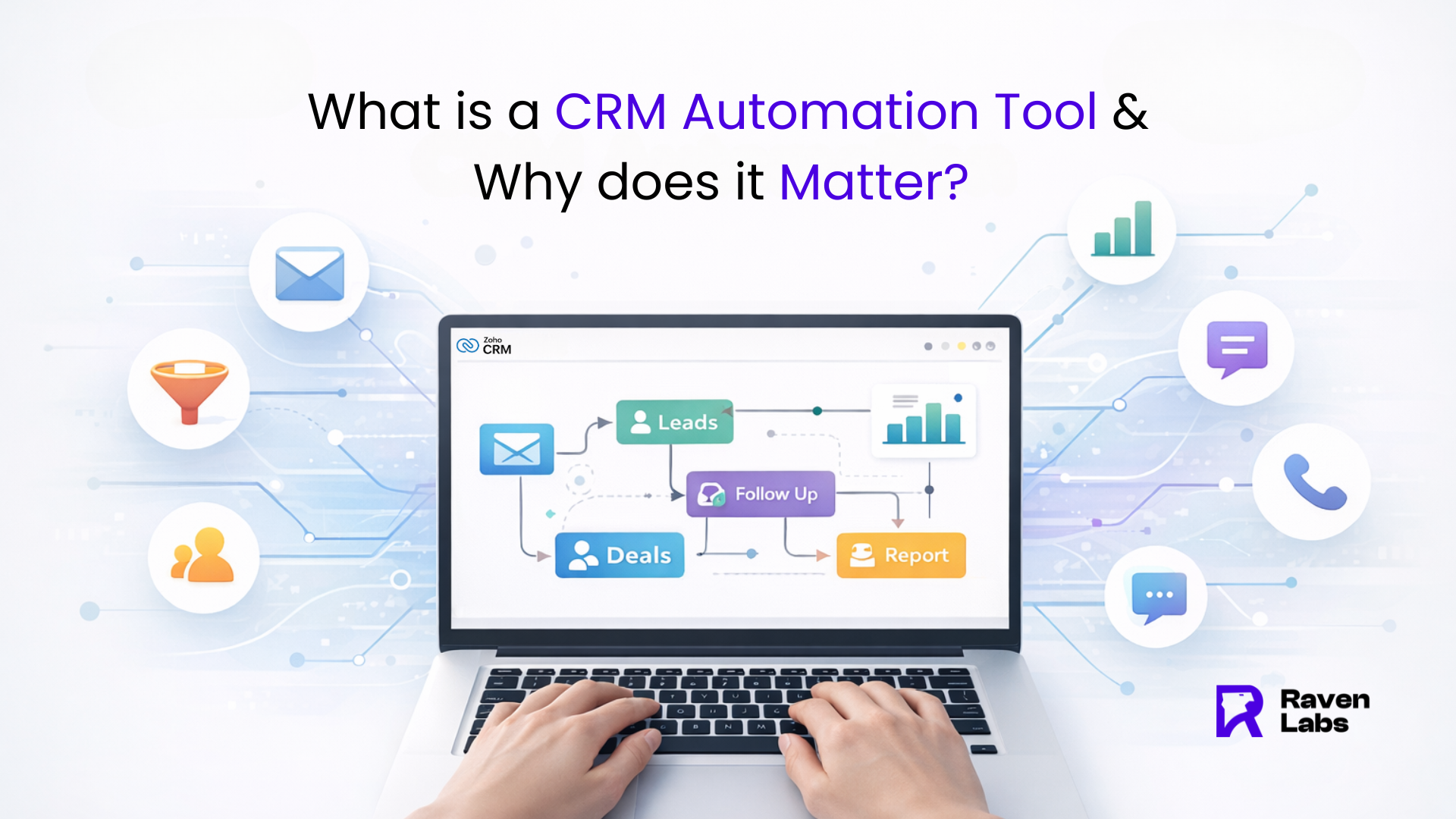
CRM automation tool combines customer relationship management with automated workflows that streamline repetitive manual tasks across sales, marketing, and customer support. By integrating automation directly into the CRM, essential activities such as data entry, follow-ups, lead assignment, and reporting occur automatically without constant human intervention. This integration of marketing CRM automation helps businesses manage customer relationships efficiently while reducing manual effort.
Why CRM Automation Matters for Modern Businesses
- Automates repetitive tasks like data entry, follow-ups, lead assignment, and reporting
- Triggers real-time actions based on customer behavior and engagement
- Reduces manual effort, errors, and delayed responses across teams
- Prevents missed leads and inconsistent communication
- Centralizes customer data, workflows, and insights in one platform
- Improves visibility into the sales pipeline and customer lifecycle
- Uses AI-driven insights to support smarter decisions and better customer interactions
Why Unified CRM Automation Beats Stitched-Together Tools
Many businesses begin with separate tools for email marketing, contact management, sales tracking, and customer support. While this stitched-together setup may work initially, it creates friction as the business scales. Data becomes siloed, integrations grow fragile, and reporting becomes increasingly unreliable.
Unified CRM automation software solves this challenge by bringing customer data, workflow automation, and analytics into one connected system. This approach to CRM integration ensures seamless data flow and consistent processes across teams.
With Zoho CRM, sales, marketing, and support teams work from a shared source of truth. Contacts, deals, emails, tickets, and interactions sync automatically across the Zoho ecosystem, eliminating context switching, duplicated effort, and data inconsistencies. This unified view supports effective lead management and delivers a complete picture of customer interactions.
As organizations grow, unified CRM automation becomes essential. Instead of managing multiple tools and integrations, teams can focus on revenue-generating activities, customer engagement, and sustainable growth.
How Zoho CRM Automation Solves Common Business Challenges
Eliminating Data Silos
When customer data is spread across tools, it’s difficult to understand the full customer journey. Zoho CRM synchronizes contact management, communication history, deal tracking, and customer service interactions, giving teams real-time visibility into every customer relationship.
Consistent Segmentation and Targeting
Disconnected systems often create mismatched customer segments. Zoho CRM enables automated customer segmentation based on behavior, lifecycle stage, and engagement, ensuring sales and marketing teams work from the same insights and deliver relevant, personalized messaging.
Fewer Fragile Integrations
Relying on multiple third-party integrations increases the risk of broken workflows and sync errors. Zoho reduces this risk by offering native tools such as Zoho Campaigns, Zoho Desk, Zoho Books, and Zoho Analytics — all designed to work seamlessly together within the CRM ecosystem.
Better Reporting and Sales Forecasting
Zoho CRM provides automated reporting and real-time dashboards that unify sales, marketing, and service data. Leaders gain accurate sales forecasting, clear pipeline visibility, and AI-driven insights without reconciling data from multiple sources.
Lower Maintenance and Costs
A unified CRM automation platform reduces subscription sprawl, IT overhead, and operational complexity. Zoho’s flexible pricing makes advanced CRM automation accessible for small and mid-market businesses without enterprise-level costs.
What to Look for in a CRM Automation Tool
The best CRM automation software combines intelligent workflows, AI-powered capabilities, and unified customer data. When evaluating a CRM automation tool, look for these essential features:
- Unified contacts and accounts
A single source of truth for all customer data, automatically updated across sales, marketing, and support teams.
- Lead scoring and predictive analytics
AI-powered lead scoring and predictive lead scoring to prioritize high-intent prospects and improve conversions.
- Automated lead routing
Instant assignment of leads based on territory, deal size, or product interest to ensure faster response times.
- Workflow automation and sequences
Automated workflows that trigger follow-ups, internal tasks, deal updates, and notifications, including sales workflow automation.
- CRM and marketing automation
Integrated tools for email automation, lead nurturing, campaign management, and customer journeys.
- Customer journey automation
End-to-end automation from automated lead capture through onboarding, retention, and expansion.
- Customer service automation
Built-in ticketing, automated ticket routing, SLA management, and post-sale support automation.
- Reporting and analytics
Centralized dashboards with automated reporting and AI-driven insights for performance tracking.
- AI assistance
AI sales assistants like Zia that provide next-best actions, sales intelligence, and forecasting insights.
- Data governance and security
Controls for data quality, permissions, and compliance as your CRM scales.
- Extensibility and integrations
Open APIs and app marketplaces that allow the CRM automation platform to grow with your business.
CRM and Marketing Automation: How They Work Together
CRM and marketing automation software deliver the most value when tightly integrated. CRM automation manages contacts, deals, and sales workflows, while marketing automation focuses on lead nurturing, email automation, and campaign execution.
Together, they ensure that:
- Leads are captured automatically
- Engagement is tracked across channels
- Sales teams receive qualified, sales-ready leads
- Messaging remains consistent throughout the funnel
Zoho CRM connects customer data with marketing workflows, creating a unified experience from first touch to conversion.
Zoho CRM: Built for Automation Without Complexity
Zoho CRM is a cost-effective CRM automation platform designed for growing businesses that need powerful functionality without enterprise complexity. It offers sales automation, workflow automation, omnichannel communication, AI-powered insights, and advanced analytics through Zia.
When combined with Zoho’s broader ecosystem, it supports the full customer lifecycle — from lead capture and nurturing to sales pipeline automation and customer service automation.
Zoho CRM is ideal for businesses that want:
- Unified CRM automation across departments
- Flexible workflow automation
- Transparent, scalable pricing
- Strong data privacy and governance
Build Smarter Workflows With Zoho CRM Automation
CRM automation is not just about efficiency — it’s about delivering a connected, personalized customer experience at scale. When CRM data automation, AI-powered insights, and workflow automation operate within one system, businesses gain predictability, agility, and sustainable growth.
Zoho CRM helps organizations replace fragmented tools and manual processes with a unified CRM automation platform. By automating repetitive tasks such as lead assignment, follow-ups, deal tracking, and reporting, teams can focus on building strong customer relationships, improving conversions, and driving long-term business success.
Ready to simplify customer management and eliminate manual work?
Talk to Raven Labs about implementing Zoho CRM automation to unify sales, marketing, and support in one intelligent system.
FAQ’S
1. What is a CRM automation tool?
A CRM automation tool automates tasks like data entry, lead assignment, and follow-ups within a CRM, helping teams manage customer relationships efficiently.
2. How does CRM automation improve business efficiency?
It reduces manual work, prevents missed follow-ups, and helps teams respond faster while keeping customer data accurate and centralized.
3. Why is a unified CRM better than using multiple tools?
A unified CRM eliminates data silos and sync issues by keeping sales, marketing, and support data in one connected platform.
4. How do CRM and marketing automation work together?
CRM manages leads and deals while marketing automation nurtures prospects, ensuring consistent messaging and smoother sales handoffs.
5. Why choose Zoho CRM for automation?
Zoho CRM offers built-in automation, AI insights, and unified reporting in a cost-effective, scalable platform for growing businesses.