Sales professionals allocate a mere 33% of their working hours to actual selling activities. This productivity deficit represents a fundamental challenge in contemporary sales operations, where administrative tasks consume most of the available time. Within a standard eight-hour working period, sales representatives engage in core selling activities for approximately 2.5 hours, while non-selling responsibilities account for the remaining duration.
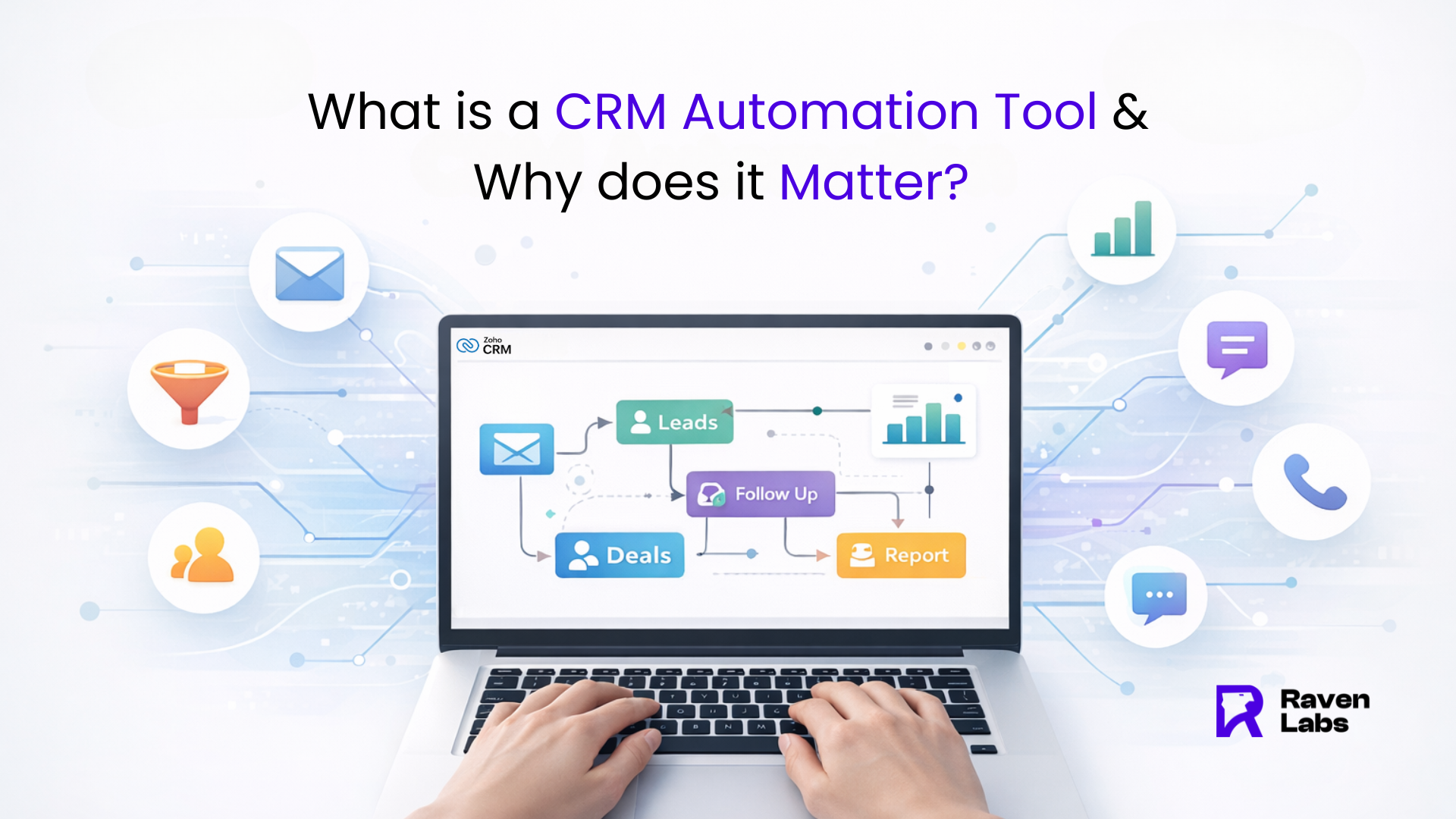
Automation systems present a methodical approach to addressing this temporal allocation problem. Zoho CRM’s automation capabilities operate through structured workflows and algorithmic processes that reduce manual intervention requirements. The platform’s analytical tools enable organizations to quantify sales performance metrics, monitor customer behavioral patterns, and detect growth-related trends through systematic data evaluation. Moreover, workflow automation functions facilitate the delegation of repetitive processes, including follow-up communications and lead management protocols, thereby increasing the proportion of time available for direct customer engagement.
The platform accommodates varying organizational scales, from emerging enterprises to established corporations, with continuous feature development throughout 2025 incorporating artificial intelligence capabilities, automation protocols, and integration frameworks tailored to specific operational requirements. Entry-level access remains available through a complimentary plan supporting up to three users, providing organizations with an opportunity to evaluate automation benefits before progressing to comprehensive subscription models beginning at $14 per user monthly.
Understanding Zoho CRM automation
Zoho CRM automation constitutes a systematic methodology for managing repetitive operational tasks through technological intervention, substantially reducing manual workload while minimizing procedural errors. Sales automation within Zoho CRM encompasses software-mediated execution of routine activities that would otherwise consume substantial selling time.
What is sales automation in Zoho CRM?
Sales automation in Zoho CRM refers to the technological execution of repetitive human tasks, consequently reducing temporal requirements, operational effort, costs, and error frequencies. These automatable processes encompass several distinct categories:
- Data entry: CRM enrichment through lead information integration with external sources such as LinkedIn, or automated information updates based on interaction patterns
- Workflow automation: Construction of interconnected task sequences activated upon completion of specific activities
- Data analysis: Transformation of complex datasets into actionable reports and pattern identification at accelerated rates compared to manual analysis
- AI-assisted tasks: Email generation, optimal contact timing recommendations, and sales team training protocols
Sales representatives, who typically allocate only 34% of their time to actual selling activities, can recover substantial periods for customer relationship development through this technological adoption.
How automation fits into the CRM ecosystem
Within the broader CRM framework, Zoho CRM functions as the central coordination point for sales automation cycles. The system consolidates all customer data pertaining to sales and marketing operations, ensuring comprehensive lead information integration within the database infrastructure. Zoho Flow provides support for over 40 combined triggers and actions alongside 100+ prebuilt templates for Zoho CRM, delivering sophisticated variable mapping capabilities.
Integration capabilities with applications such as Slack, QuickBooks, and Zoom extend operational functionality beyond the Zoho ecosystem, establishing interconnected business environments. These integration frameworks enable organizations to automate the equivalent of two full-time positions and delegate sales and support functions, eliminating routine tasks that previously generated operational delays and procedural mistakes.
The role of AI in modern CRM workflows
Zia, Zoho’s AI-powered assistant, represents the forefront of contemporary CRM workflow management. This intelligent system identifies repetitive business activities suitable for automation and recommends workflows, macros, and owner assignment automation protocols. Moreover, Zia introduces artificial intelligence capabilities to workflow processes through anomaly detection and workflow rule optimization suggestions.
AI facilitates data-driven decision making among sales teams through predictive analytics, anomaly detection, and next-best-action recommendations. Organizations implementing AI-powered sales tools demonstrate potential for 10-15% increases in sales productivity, with AI systems conserving approximately one hour per day per employee that can be redirected toward higher-value activities.
Lead management processes through automation
Successful sales strategies depend on systematic lead management protocols. Automated systems within Zoho CRM coordinate this process from initial prospect identification through final conversion, maintaining continuity across all customer touchpoints.
Prospect capture mechanisms
Lead acquisition commences through web-based collection systems. Zoho CRM webforms extract visitor information directly from organizational websites, with deployment options including hosted integration and distributed access through links and QR code systems. The platform imports lead data without manual processing requirements. Marketing platform integrations, including Facebook Lead Ads and Google Ads, establish direct data pathways into the CRM database, eliminating transfer delays.
Prospect prioritization through scoring algorithms
Lead scoring mechanisms evaluate prospects using quantitative criteria rather than subjective assessment. The system analyses three primary data categories:
- Content engagement metrics (email interactions, click patterns, forwarding behavior)
- Website activity measurements (page access frequency, session duration, return visits)
- Demographic profile characteristics (organizational role, industry classification, geographic location)
These scoring algorithms enable sales teams to concentrate efforts on prospects demonstrating highest conversion probability, optimizing resource allocation patterns.
Sequential communication automation
The Cadences functionality orchestrates multi-channel communication sequences through email, telephonic contact, and task generation based on customer response patterns. Each sequence establishes targeted interaction points activated by specific lead behaviors. When prospects engage with communications without providing responses, the system initiates subsequent contact tasks automatically, sustaining engagement without manual oversight requirements.
Distribution rule implementation
Assignment protocols distribute leads according to predetermined criteria including territorial boundaries, product specialization areas, and acquisition source classifications. These automated distribution systems ensure leads reach representatives with appropriate expertise rather than random allocation. The platform evaluates user availability through online status monitoring and scheduling parameters, facilitating prompt follow-up execution.
Real-time engagement monitoring
Zoho SalesIQ integration delivers live prospect activity insights, enabling teams to observe customer behaviors during active sessions. This monitoring capability activates engagement protocols through chat triggers responding to lead scores, page navigation patterns, time allocation, and specific user actions. Immediate visibility permits sales team interaction during optimal engagement windows, substantially increasing conversion potential.
Workflow automation effects on sales performance metrics
Workflow automation functions as the operational foundation for high-performance sales environments. However, rather than merely serving as a data repository, Zoho CRM operates as an active execution engine that initiates predetermined actions when specified criteria are satisfied.
Manual task reduction through automated workflows
Sales organizations historically allocate substantial resources to administrative processes, including data entry protocols and follow-up communications. Zoho CRM’s workflow automation mechanisms initiate predefined responses based on established parameters—dispatching communications, modifying data fields, or generating task assignments without direct human oversight. This systematic approach reduces operational errors while enabling teams to concentrate resources on relationship development and transaction completion.
Multi-step workflow construction and implementation
The fundamental capability of Zoho CRM resides in interconnected workflow systems that coordinate complex sales processes. These sequential automation protocols can:
- Advance opportunities through defined pipeline stages automatically
- Generate contract renewal notifications 30 days prior to expiration
- Escalate outstanding tasks when predetermined deadlines are exceeded
Response time optimization through automation protocols
Given that 82% of consumers anticipate immediate responses to sales communications, automation becomes essential for maintaining customer satisfaction levels. Nevertheless, Zoho’s auto-response functionality ensures immediate acknowledgment of customer inquiries, establishing appropriate expectations while sustaining engagement during critical evaluation periods.
Departmental alignment via shared workflow systems
Integrated workflow architectures establish unified platforms where both sales and marketing teams access identical datasets. Consequently, marketing operations generate higher-quality prospects while sales teams benefit from comprehensive engagement histories. These connected workflow systems eliminate manual transfer processes between departments, facilitating continuous collaboration throughout the customer acquisition journey.
Empirical applications of Zoho CRM automation across business processes
Theoretical frameworks require validation through practical implementation to demonstrate their clinical significance. The operational deployment of Zoho CRM automation yields quantifiable outcomes across diverse organizational functions.
Email automation for lead nurturing protocols
Integration between Zoho CRM and Zoho Campaigns facilitates synchronized contact management through automated mailing list coordination. This configuration generates qualified prospect delivery to sales teams through communications calibrated to distinct purchasing intentions. Custom template development enables consistent brand messaging maintenance during multi-product evaluation periods, a critical factor when prospects assess competing solutions simultaneously.
Data enhancement through automated enrichment processes
Zia, the platform’s intelligent assistant, performs autonomous data augmentation for business records. The system extracts supplementary prospect and contact information from web sources using minimal initial data points. This enhancement mechanism appears to improve lead qualification processes and may increase conversion rates by up to 300%. Enhanced data quality facilitates improved segmentation strategies for marketing campaigns, potentially yielding higher engagement rates and return on investment metrics.
Predictive sales forecasting through AI analysis
Simplify your sales process with automation that works. Let Raven Labs help you implement and optimize Zoho CRM to close more deals — faster and smarter.
Zia’s forecasting algorithms identify sales opportunities through historical data analysis and anomaly detection in target achievement patterns. Organizations implementing AI-powered forecasting systems report approximately 29% increases in sales performance and demonstrate 25% improvements in forecast accuracy. However, these outcomes may reflect variations in implementation methodology and organizational contexts.
Real-time notification systems for deal progression
Contemporary business environments necessitate immediate awareness of critical developments. Zoho CRM’s trigger-based alert mechanisms provide instantaneous notifications regarding key activities, from initial lead acquisition through deal closure. This immediate visibility enables rapid response protocols for critical events while reducing the probability of missed opportunities.
Third-party integration capabilities
Zoho CRM maintains connectivity with numerous external applications, including Slack, Microsoft Teams, and various marketing platforms. Integration with communication tools such as Slack enables direct notification delivery to designated channels, ensuring team-wide awareness of critical updates. These connections extend functional capabilities beyond the core CRM environment, creating interconnected operational ecosystems.
FAQs
1. What is Zoho CRM automation and how does it improve sales productivity?
Zoho CRM automation uses workflows, AI, and triggers to automate repetitive sales tasks like follow-ups, lead assignment, data entry, and reporting. This allows sales teams to spend more time selling instead of handling admin work.
2. How much time do sales teams actually spend on selling without automation?
On average, sales professionals spend only 33% of their working time on actual selling, while the rest goes into administrative and non-selling tasks. Automation helps recover this lost selling time.
3. How does AI work inside Zoho CRM?
Zoho CRM uses its AI assistant Zia to provide predictive sales insights, automate repetitive actions, detect anomalies, recommend next-best actions, and improve forecasting accuracy using data-driven analysis.
4. How does Zoho CRM automate lead management?
Zoho CRM automates lead capture from websites and ads, applies lead scoring, assigns leads through distribution rules, runs follow-up cadences, and tracks real-time visitor activity through SalesIQ.
5. What is workflow automation in Zoho CRM?
Workflow automation in Zoho CRM allows businesses to create rule-based actions that trigger emails, update fields, assign users, schedule tasks, and move deals through pipelines automatically.
6. Can Zoho CRM integrate with third-party tools like Slack and QuickBooks?
Yes. Zoho CRM integrates with Slack, Zoom, QuickBooks, Teams, email platforms, and marketing tools, enabling real-time notifications, automated data syncing, and connected workflows.
7. Is Zoho CRM suitable for small businesses as well as large enterprises?
Yes. Zoho CRM is scalable and includes a free plan for up to three users, making it suitable for startups, growing businesses, and large enterprises with advanced automation needs.
8. How does Zoho CRM automation impact sales forecasting and revenue growth?
AI-driven forecasting in Zoho CRM improves prediction accuracy, identifies risky deals early, and highlights high-conversion opportunities—helping businesses increase revenue and reduce missed targets.
Summary and implications
Zoho CRM automation demonstrates measurable effects on lead management processes and sales performance metrics. Analysis of temporal allocation patterns reveals that sales teams can modify their productivity distribution, progressing beyond the established baseline of 33% selling time through systematic automation implementation. Lead management capabilities facilitate prospect progression through sales pipelines with reduced manual oversight requirements.
Workflow automation mechanisms eliminate administrative task loads while establishing multi-step processes that operate autonomously. Sales representatives may therefore allocate increased attention to relationship development and deal completion activities. Empirical applications validate Zoho CRM’s operational impact through automated email campaigns, AI-enhanced data enrichment protocols, and algorithmic sales forecasting capabilities.
Organizational scalability remains evident across implementation levels, from entry-tier access through complimentary plans to enterprise-scale operations requiring expanded functionality. The integration of artificial intelligence capabilities, customizable workflow structures, and third-party connectivity frameworks creates an adaptable ecosystem responsive to specific operational parameters. However, organizations continuing to allocate substantial resources to manual sales processes may benefit from evaluating automation adoption as a strategic approach to customer relationship management and revenue optimization protocols.
Simplify your sales process with automation that works. Let Raven Labs help you implement and optimize Zoho CRM to close more deals — faster and smarter. Book a Consultation today.
📞 Contact us: 1300 305 009
📧 Email: info@theravenlabs.com
🌐 Visit: www.theravenlabs.com